Showing posts with label America. Show all posts

Saturday, April 19, 2008

Benedict on Saturday: "Dear Friends, Truth is Not an Imposition"


Below are some excerpts from Benedict’s homily to the Catholic clergy in New York and his address at a youth rally in Yonkers. Click on the title if you’d like to read the whole text.

The best visual of the day (for me) was seeing him visiting a group of “youths with disabilities” before the youth rally. These were mostly children with severe mental handicaps, most of whom probably had no idea who this guy in a white dress was . . . if they even comprehended that there was a guy in a white dress standing in front of them and holding their hand or caressing their face. How significant it is that we Christians value human life simply because it is human life, and not for a person’s utility or his ability to enjoy a “full” life.

The best line of the day was at the end of the Pope’s address at the youth rally. Everyone started clapping, then he interjected, “Ach, I forgot my Spanish part!”

Oh, well. Guess you had to see it to appreciate it.


Homily at St. Patrick’s Cathedral

With great affection in the Lord, I greet all of you, who represent the Bishops, priests and deacons, the men and women in consecrated life, and the seminarians of the United States.

This is the message of hope we are called to proclaim and embody in a world where self-centeredness, greed, violence, and cynicism so often seem to choke the fragile growth of grace in people’s hearts. Saint Irenaeus, with great insight, understood that the command which Moses enjoined upon the people of Israel: “Choose life!” (Dt 30:19) was the ultimate reason for our obedience to all God’s commandments (cf. Adv. Haer. IV, 16, 2-5). Perhaps we have lost sight of this: in a society where the Church seems legalistic and “institutional” to many people, our most urgent challenge is to communicate the joy born of faith and the experience of God’s love.


Address at the Youth Rally

Young friends, I am very happy to have the opportunity to speak with you. Please pass on my warm greetings to your family members and relatives, and to the teachers and staff of the various schools, colleges and universities you attend. I know that many people have worked hard to ensure that our gathering could take place. I am most grateful to them all. Also, I wish to acknowledge your singing to me Happy Birthday! Thank you for this moving gesture; I give you all an “A plus” for your German pronunciation! This evening I wish to share with you some thoughts about being disciples of Jesus Christ

My own years as a teenager were marred by a sinister regime that thought it had all the answers; its influence grew - infiltrating schools and civic bodies, as well as politics and even religion - before it was fully recognized for the monster it was. It banished God and thus became impervious to anything true and good. Many of your grandparents and great-grandparents will have recounted the horror of the destruction that ensued. Indeed, some of them came to America precisely to escape such terror.

Let us thank God that today many people of your generation are able to enjoy the liberties which have arisen through the extension of democracy and respect for human rights. Let us thank God for all those who strive to ensure that you can grow up in an environment that nurtures what is beautiful, good, and true: your parents and grandparents, your teachers and priests, those civic leaders who seek what is right and just.

The power to destroy does, however, remain. To pretend otherwise would be to fool ourselves. Yet, it never triumphs; it is defeated. This is the essence of the hope that defines us as Christians; and the Church recalls this most dramatically during the Easter Triduum and celebrates it with great joy in the season of Easter! The One who shows us the way beyond death is the One who shows us how to overcome destruction and fear: thus it is Jesus who is the true teacher of life (cf. Spe Salvi, 6). His death and resurrection mean that we can say to the Father “you have restored us to life!” (Prayer after Communion, Good Friday).

Have you noticed how often the call for freedom is made without ever referring to the truth of the human person? Some today argue that respect for freedom of the individual makes it wrong to seek truth, including the truth about what is good. In some circles to speak of truth is seen as controversial or divisive, and consequently best kept in the private sphere. And in truth’s place - or better said its absence - an idea has spread which, in giving value to everything indiscriminately, claims to assure freedom and to liberate conscience. This we call relativism. But what purpose has a “freedom” which, in disregarding truth, pursues what is false or wrong? How many young people have been offered a hand which in the name of freedom or experience has led them to addiction, to moral or intellectual confusion, to hurt, to a loss of self-respect, even to despair and so tragically and sadly to the taking of their own life? Dear friends, truth is not an imposition. Nor is it simply a set of rules. It is a discovery of the One who never fails us; the One whom we can always trust. In seeking truth we come to live by belief because ultimately truth is a person: Jesus Christ. That is why authentic freedom is not an opting out. It is an opting in; nothing less than letting go of self and allowing oneself to be drawn into Christ’s very being for others (cf. Spe Salvi, 28).

What matters most is that you develop your personal relationship with God. That relationship is expressed in prayer. God by his very nature speaks, hears, and replies. Indeed, Saint Paul reminds us: we can and should “pray constantly” (1 Thess 5:17). Far from turning in on ourselves or withdrawing from the ups and downs of life, by praying we turn towards God and through him to each other, including the marginalized and those following ways other than God’s path (cf. Spe Salvi, 33). As the saints teach us so vividly, prayer becomes hope in action. Christ was their constant companion, with whom they conversed at every step of their journey for others.

There is another aspect of prayer which we need to remember: silent contemplation. Saint John, for example, tells us that to embrace God’s revelation we must first listen, then respond by proclaiming what we have heard and seen (cf. 1 Jn 1:2-3; Dei Verbum, 1). Have we perhaps lost something of the art of listening? Do you leave space to hear God’s whisper, calling you forth into goodness? Friends, do not be afraid of silence or stillness . . . .


Thursday, April 17, 2008

Not a Republican, and Certainly Not a Democrat


I wish I had the time and skill to flesh out this thought, but as I listened to the Pope's talks yesterday (at the White House and to the U.S. Bishops), it occurred to me that the Pope is a bigger booster of the United States than are the two Democratic candidates for President. He spoke enthusiastically about the force for good that our country has been, the generosity of our people, the vibrancy of our religious commitment, and the magnet we are to people of other lands.
.
The Democrats, on the other hand, seem to think this is a land of pain, suffering, bitterness, exploitation, repression, and gloom. They are dismayingly negative, despite the rhetoric of "hope" and possibility. I'm certainly not one to say everything's wonderful, here, but who's more right? I side with the Pope on this one.
.
(To be about as non-partisan as I can manage right now, I should add that the Republicans are acting like the anti-immigration party, and that's regrettable.)
.
By popular demand from my vast readership (aka Roy), here are some excerpts from last night's address to the Bishops. The entire speech is much longer, which you can read here if you like.


Brother Bishops, I want to encourage you and your communities to continue to welcome the immigrants who join your ranks today, to share their joys and hopes, to support them in their sorrows and trials, and to help them flourish in their new home. This, indeed, is what your fellow countrymen have done for generations. From the beginning, they have opened their doors to the tired, the poor, the “huddled masses yearning to breathe free” (cf. Sonnet inscribed on the Statue of Liberty). These are the people whom America has made her own.

Of those who came to build a new life here, many were able to make good use of the resources and opportunities that they found, and to attain a high level of prosperity. Indeed, the people of this country are known for their great vitality and creativity. They are also known for their generosity. After the attack on the Twin Towers in September 2001, and again after Hurricane Katrina in 2005, Americans displayed their readiness to come to the aid of their brothers and sisters in need. On the international level, the contribution made by the people of America to relief and rescue operations after the tsunami of December 2004 is a further illustration of this compassion. Let me express my particular appreciation for the many forms of humanitarian assistance provided by American Catholics through Catholic Charities and other agencies. Their generosity has borne fruit in the care shown to the poor and needy, and in the energy that has gone into building the nationwide network of Catholic parishes, hospitals, schools and universities. All of this gives great cause for thanksgiving.

America is also a land of great faith. Your people are remarkable for their religious fervor and they take pride in belonging to a worshipping community. They have confidence in God, and they do not hesitate to bring moral arguments rooted in biblical faith into their public discourse. Respect for freedom of religion is deeply ingrained in the American consciousness - a fact which has contributed to this country’s attraction for generations of immigrants, seeking a home where they can worship freely in accordance with their beliefs.

While it is true that this country is marked by a genuinely religious spirit, the subtle influence of secularism can nevertheless color the way people allow their faith to influence their behavior. Is it consistent to profess our beliefs in church on Sunday, and then during the week to promote business practices or medical procedures contrary to those beliefs? Is it consistent for practicing Catholics to ignore or exploit the poor and the marginalized, to promote sexual behavior contrary to Catholic moral teaching, or to adopt positions that contradict the right to life of every human being from conception to natural death? Any tendency to treat religion as a private matter must be resisted. Only when their faith permeates every aspect of their lives do Christians become truly open to the transforming power of the Gospel.

For an affluent society, a further obstacle to an encounter with the living God lies in the subtle influence of materialism, which can all too easily focus the attention on the hundredfold, which God promises now in this time, at the expense of the eternal life which he promises in the age to come (cf. Mk 10:30). People today need to be reminded of the ultimate purpose of their lives. They need to recognize that implanted within them is a deep thirst for God. They need to be given opportunities to drink from the wells of his infinite love. It is easy to be entranced by the almost unlimited possibilities that science and technology place before us; it is easy to make the mistake of thinking we can obtain by our own efforts the fulfillment of our deepest needs. This is an illusion. Without God, who alone bestows upon us what we by ourselves cannot attain (cf. Spe Salvi, 31), our lives are ultimately empty. People need to be constantly reminded to cultivate a relationship with him who came that we might have life in abundance (cf. Jn 10:10). The goal of all our pastoral and catechetical work, the object of our preaching, and the focus of our sacramental ministry should be to help people establish and nurture that living relationship with “Christ Jesus, our hope” (1 Tim 1:1).

In a society which values personal freedom and autonomy, it is easy to lose sight of our dependence on others as well as the responsibilities that we bear towards them. This emphasis on individualism has even affected the Church (cf. Spe Salvi, 13-15), giving rise to a form of piety which sometimes emphasizes our private relationship with God at the expense of our calling to be members of a redeemed community. Yet from the beginning, God saw that “it is not good for man to be alone” (Gen 2:18). We were created as social beings who find fulfillment only in love - for God and for our neighbor. If we are truly to gaze upon him who is the source of our joy, we need to do so as members of the people of God (cf. Spe Salvi, 14). If this seems counter-cultural, that is simply further evidence of the urgent need for a renewed evangelization of culture.

Time spent in prayer is never wasted, however urgent the duties that press upon us from every side.


What is needed, I am convinced, is a greater sense of the intrinsic relationship between the Gospel and the natural law on the one hand, and, on the other, the pursuit of authentic human good, as embodied in civil law and in personal moral decisions. In a society that rightly values personal liberty, the Church needs to promote at every level of her teaching - in catechesis, preaching, seminary and university instruction - an apologetics aimed at affirming the truth of Christian revelation, the harmony of faith and reason, and a sound understanding of freedom, seen in positive terms as a liberation both from the limitations of sin and for an authentic and fulfilling life. In a word, the Gospel has to be preached and taught as an integral way of life, offering an attractive and true answer, intellectually and practically, to real human problems. The “dictatorship of relativism”, in the end, is nothing less than a threat to genuine human freedom, which only matures in generosity and fidelity to the truth.

Young people, if they know how to pray, can be trusted to know what to do with God’s call.


Wednesday, June 27, 2007

Pop Quiz - Capital Punishment in America

Which country performed the most executions in 2006: China, Iran, or U.S.A.?


How many executions did the U.S.A. perform in 2006 (to the nearest 100)?
.


Got your answers in mind?


.


Would it surprise you to know that China performed 7,500-8,000 executions, Iran 170, but the U.S.A. only 50? From all the attention that the death penalty gets in this country, from the protestations of Amnesty International and the condemnations of "civilized" countries like the U.K. (which doesn't practice capital punishment), you'd think there was a judicial bloodbath going on here. (These statistics come from Amnesty International, by the way - via The Economist's issue of 4/28/07.) In a country of 300,000,000, with about 16,000 murders per year - around 600 of them in NY City, alone - wouldn't you expect the rate of capital punishment to be higher?

And for another point of interesting perspective: worldwide, there are approximately 46 million abortions per year, representing 1 in 4 pregnancies (3 of 4 in Romania and Shanghai, 2 of 3 in Russia). In the U.S., the number is around 1.3 million (3 of 4 pregnancies in New York City).

There is in fact a bloodbath going on, but it's not through capital punishment.

Thursday, June 14, 2007

Elimination, Selective Reduction, Deletion - Murder?

If you can read this GetReligion post without being repulsed and at least a little sick, then you deserve my admiration or pity. The Washington Post article it's mostly about discusses the murder of selected fetuses when the mother is carrying more than one at a time. Pregnant with 3, but only have room at home for 2 more? There are doctors who can help you with that.

It's astonishing to me that the Washington Post would run an article such as this, which hardly helps to forward the pro-choice agenda. Here's an excerpt that gives you an idea of what you're getting into:

Evans prepared two syringes, swabbed Emma with antiseptic, put the square-holed napkin on her stomach. Then he plunged one of the needles into Emma’s belly and began to work his way into position. He injected the potassium chloride, and B, the first fetus to go, went still.

“There’s no activity there,” he said, scrutinizing the screen. B was lying lengthwise in its little honeycomb chamber, no longer there and yet still there. It was impossible not to find the sight affecting. Here was a life that one minute was going to happen and now, because of its location, wasn’t. One minute, B was a fetus with a future stretching out before it: childhood, college, children, grandchildren, maybe. The next minute, that future had been deleted.

Evans plunged the second needle into Emma’s belly. “See the tip?” he said, showing the women where the tip of the needle was visible on the ultrasound screen. Even I could see it: a white spot hovering near the heart. D was moving. Evans started injecting. He went very slowly. “If you inject too fast, you blow the kid off your needle,” he explained.

If a nation ever deserved God's judgment, isn't it ours?
.


Wednesday, May 30, 2007

More "Lite" on the Subject

Rather than move on to something new, I'd like to continue yesterday's theme. Yesterday's post resulted in excellent comments from Gene and Ron. Please take a look at them - anything you'd like to add?

I'm especially interested in your thoughts about why evangelicals don't seem to do any better on divorce stats and the like than the rest of the population.

And finally, here's a link from yesterday's Leadership Journal blog that has a pastor discussing issues related to this discussion - in particular, "consumer Christianity."

Tuesday, May 29, 2007

"You Are The 'Lite' Of The World" - The Church As 98-Pound Weakling

I don't put all that much original content on this blog, because others often express my thoughts better than I can, myself. Here's a good example from a book critical of American evangelicalism. I haven't read the book, and I don't know what "solutions" the author (Dick Staub) offers, but his diagnosis in this excerpt is pretty good, don't you think?

You can read a longer excerpt here.

The sobering contrast between historic Christianity and Christianity-Lite is illustrated by my recent experience in China. There, I heard the testimony of an underground church leader who had spent eighteen grueling years in prison, where he was beaten, chained, and subjected to physical torture and psychological torment, all because of his profession of faith in Jesus Christ. His captors lied to him, fabricated stories about infidelity on the part of his wife and a suicide attempt on the part of his son, offering to release him if he would just denounce Jesus Christ as Lord. He showed us the purple grooves in his wrist where the chains had penetrated his rotting, infected flesh, rubbing it down to the bones.

He wept as he told us of how close he had come to denying his faith so that he could avoid the escalating torture and be reunited with his family. Yet he resisted betraying his faith by concentrating on the example of Jesus, who, as the Apostle Paul said, "emptied himself, took upon himself the form of a servant and made himself obedient even to his own death" (Philippians 2:7-8). Though severely tempted, the Chinese Christian could not turn his back on Jesus, who had suffered so much for him. In China, the house church movement has grown, despite persecution, because of the deep faith of Christians like this man, who view their suffering for their faith as normative, not heroic.

The day I returned to the United States, I found at the top of my stack of mail a postcard from a new seeker-sensitive church. It pictured a convict in black and white striped prison garb, a ball and chain attached to his ankle. I flipped the card over to read the message on the back: "Does going to church feel like going to prison? Not anymore!" The card went on to offer the seeker comfortable, stadium-style seating at a local cineplex, complete with popcorn, face painting and other fun and games for the kids, and, best of all, no preaching—just multimedia presentations and an inspirational talk designed to lead to greater success in life!

Is the gospel offered by this seeker-sensitive church the same as the gospel preached in China but adapted to our very different cultural milieu, or is this a completely different gospel? Is this simply a strategic accommodation that will produce a vibrant local church with the same kind of spiritual depth and maturity that I witnessed among Christians in China? The answer seems obvious. Christians are called to be light of the world, not the lite of the world.

What kind of culture is today's popularized Christianity producing? Again, the answer seems obvious. Instead of creating a robust, authentic culture, Christianity-Lite simply imitates the broader popular culture's aesthetic in form and content. A friend of mine who was departing the pastorate after twenty years told me, "I embrace evangelical doctrine; I just can't stomach its culture." My friend Ralph Mattson once put it this way to me: "If Christians were going to create a subculture, why did they have to create one that is so boring, imitative, and uninspiring?"

Vibrant faith involves understanding Scripture, employing reason, benefiting from the lessons of tradition, and engaging in a profound personal experience of God. From this kind of spiritual intensity flows cultural transformation. I once heard a seminary professor summarize historian T. R. Glover's explanation about the influence of early Christians on culture this way: the early Christians out-thought, outlived, and out-died their pagan counterparts. This certainly cannot be said of pop Christians.

...

Within evangelicalism, many thoughtful people are troubled about the price we have paid for our "success." Some believe that in our quest for numeric growth, we have grown big but are shallow, producing an American Christianity three thousand miles wide but two inches deep. Others observe that our apparent success has been accomplished by conforming to American culture rather than transforming it, pointing out, as Alan Wolfe observed, that instead of theological, it is therapeutic; instead of intellectual, it is emotional and revivalist; instead of emphasizing a serving community, it is consumeristic and individualistic; instead of producing spiritual growth and depth, it is satisfied with entrepreneurialism and numeric growth. Instead of being a moral and spiritual beacon, evangelicalism is viewed as an important political and economic niche.

...

Dallas Willard reminds us of something anyone who reads the New Testament knows, Jesus never called anyone to be a Christian; he only called people to be disciples, individuals who would learn from him and obey all that he commanded. In place of Jesus' call to self-denial and promise of persecution and sacrifice, today's consumer-oriented, commoditized Christianity offers heaven in the future and fulfillment of the American dream now.

Friday, May 18, 2007

Xenophilia

Since I managed to criticize our fair country regarding guns, why not continue to do the same on other subjects, too?

I found this intro in US News & World Report (3/26/07 issue) to be interesting. More people want to move to the U.S. than anywhere else, but that doesn't mean we have nothing to learn from anywhere else. Read on for some examples. And if you'd like to read in detail the "30 lessons we can learn from other countries," you can click on this link.

How They Do It Better
By Susan Headden
Posted 3/18/07
We have the biggest GDP, the finest universities, the highest ownership of color TVs, and the greatest number of Nobel Prize winners. So how come the Danes are the happiest people in the world? Living in the dark, no less. Schoolchildren in New Zealand are cleaning our clocks in math and science. Teachers are better paid and more respected in Japan. Our highways are choked with traffic, but we can't manage to build a train that goes more than 150 mph.

Our eating habits? Please. Just compare our average portion with a meal in Japan, and you'll understand why our adult obesity rate is 32 percent, compared with only 3.6 percent for the Japanese. The French, likewise, are slim and well fed-and they offer world-class dinner conversation to boot. Their secret: They don't want to know what you did yesterday; they want to engage you in a lively discussion of ideas.

But our shortcomings are bigger than dining and discourse. Remarkably, the United States is nowhere to be found on the Economist's global index of lowest infant mortality. At the other end, our average life expectancy, at 77.9, puts us 40th in the world- after Costa Rica and Cuba. As for our treatment of the planet, we're down at No. 28 on the global index of environmental performance, a value based on six measurements of environmental health. Meanwhile, Denmark manages to get 20 percent of its energy from the wind. And in Singapore, tossing a candy wrapper on the sidewalk will set you back a thousand bucks.

On a grimmer index, America has more people in prison-2,135,900-than any other country in the world. And the highest rate of gun-related homicides of all industrialized nations. If we followed Europe's example of treating drug addicts rather than jailing them, would the numbers go down? It's a complex and controversial question. But Holland's experience shows that treatment of drug
abuse is at least vastly cheaper than the alternative.

In the following pages, we offer 30 lessons we can learn from other countries. The list is admittedly unscientific and decidedly incomplete. We're not even saying that all of these practices would work here; if Americans wanted free day care and government-funded maternity leave, after all, they'd have to pay Norway-size
taxes.

What follow are simply practices that intrigued us: the Germans retraining prostitutes to care for the elderly, the Brazilian buses that are so clean and efficient that even the rich people ride them, and the Japanese toilets that deodorize the room and put the seat down when you're done.

Wednesday, May 16, 2007

Don't Shoot, I'm Only the Blogger

The April 21 issue of The Economist provided some interesting statistics (and other information) about guns in the U.S.A. Together, they tell a story:

Number of guns in America: ~240 million
Number of adults in America: Less than that.

Murders with guns, 2005: 14,000
Suicides by firearm, 2004: 16,000
Fatal firearm accidents, 2004: 650
Children killed by guns, 2004: 400

In the last 45 years, more Americans have died by gunfire than were killed on foreign battlefields in the last 100 years.

President who signed bills banning assault weapons (semi-automatic rifles and high-capacity handgun magazines) and requiring background checks before gun sales: Bill Clinton
President in office when assault weapons ban expired: George Bush

Households with guns, 1977: 54%
Households with guns, 2007: 33%

On-line price of an AK-47: $379.99

I have nothing original to add. To my knowledge, we are the most violent "developed" society on earth. I defy anyone in my VAST readership to tell me why any person (except the police and military) should be able to buy assault weapons, armor-piercing bullets, and the like. Idiocy in the defense of freedom is still idiocy.

(You can read the entire article here, but you might need a subscription to do so.)

Thursday, April 12, 2007

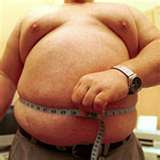
The Fattest Nation on Earth

A couple weeks ago, I was in Orlando on business. I stayed in an expensive hotel on Disney property and took our business partners to dinner at an even more expensive Disney hotel. At both these hotels, we had occasion to visit the pool areas.

You know how in the movies, everyone by the pool is beautiful? How the men are gorgeous and the women are muscular? Well, real life at Disney is nothing like that. Poolside at Disney looks more like a convention of pears, grapes, and eggplants, but nobody's wearing a costume. Makes you wish they were.
No wonder people go to the Internet when they want to see beautiful people.

The Wall Street Journal recently quoted World Health Organization statistics, which show the following estimated obesity rates for people aged 15 years and over ("obese" = BMI >30):
  • Japan 1.6%
  • China 1.7%
  • France 7.2%
  • Germany 20.7%
  • U.K. 22.9%
  • U.S. 39.2% We're #1! We're #1!

American dominance is always comforting, but aside from American superiority, what conclusions can we draw from these statistics?

  • Speaking English makes you fat. It's probably because of all the lazy vowels (which, in the U.S., are worst in the South, and that's where the fattest people are).

  • Speaking Asian languages makes you skinny, because it takes a lot of energy to speak such difficult languages.

You can't really disagree with this. Statistics don't lie.