Showing posts with label WSJ. Show all posts

Tuesday, July 14, 2009

Sarah's 15 Minutes Are Up...or Should Be


I started out really liking Sarah Palin. As time passed, my enthusiasm waned. For me, the biggest blow was when Katie Couric asked her something along the lines of what she read to keep up with current events, and Sarah answered, "Oh, everything." When pressed, she couldn't name a single publication...if only she had said, "The Economist"! I'm not sure Katie was playing fair in the interview, overall, but this particular question was eminently fair, and the answer thoroughly disappointing. I knew then that we were in trouble.

Now she's resigned from her governorship, and I wish she'd just go away. Peggy Noonan (a card-carrying conservative, by the way) has put into words thoughts I didn't even know I had. Here's an excerpt from a recent Wall Street Journal column (emphasis mine):

Sarah Palin's resignation gives Republicans a new opportunity to see her plain—to review the bidding, see her strengths, acknowledge her limits, and let go of her drama. It is an opportunity they should take. They mean to rebuild a great party. They need to do it on solid ground.

Her history does not need to be rehearsed at any length. Ten months ago she was embraced with friendliness by her party. The left and the media immediately overplayed their hand, with attacks on her children. The party rallied round, as a party should. She went on the trail a sensation but demonstrated in the ensuing months that she was not ready to go national and in fact never would be. She was hungry, loved politics, had charm and energy, loved walking onto the stage, waving and doing the stump speech. All good. But she was not thoughtful. She was a gifted retail politician who displayed the disadvantages of being born into a point of view (in her case a form of conservatism; elsewhere and in other circumstances, it could have been a form of liberalism) and swallowing it whole: She never learned how the other sides think, or why.

In television interviews she was out of her depth in a shallow pool. She was limited in her ability to explain and defend her positions, and sometimes in knowing them. She couldn't say what she read because she didn't read anything. She was utterly unconcerned by all this and seemed in fact rather proud of it: It was evidence of her authenticity. She experienced criticism as both partisan and cruel because she could see no truth in any of it. She wasn't thoughtful enough to know she wasn't thoughtful enough. Her presentation up to the end has been scattered, illogical, manipulative and self-referential to the point of self-reverence. "I'm not wired that way," "I'm not a quitter," "I'm standing up for our values." I'm, I'm, I'm.

In another age it might not have been terrible, but here and now it was actually rather horrifying.


If you'd like to read the entire column, it's here.

Monday, June 1, 2009

Why Are Atheists So Irrational?


This article came out on September 19, 2008, and I meant to blog about it then, but I've been running way behind. It's about a Gallup study that examined the beliefs of the religious and the irreligious. Guess who turns out to be the most superstitious?

Here's an excerpt from the article, which originally appeared in the Wall Street Journal here. If you want to read the entire article and that link doesn't work for you, try this one.


Look Who's Irrational Now
By MOLLIE ZIEGLER HEMINGWAY


...The reality is that the New Atheist campaign, by discouraging religion, won't create a new group of intelligent, skeptical, enlightened beings. Far from it: It might actually encourage new levels of mass superstition. And that's not a conclusion to take on faith -- it's what the empirical data tell us.

"What Americans Really Believe," a comprehensive new study released by Baylor University yesterday, shows that traditional Christian religion greatly decreases belief in everything from the efficacy of palm readers to the usefulness of astrology. It also shows that the irreligious and the members of more liberal Protestant denominations, far from being resistant to superstition, tend to be much more likely to believe in the paranormal and in pseudoscience than evangelical Christians.

The Gallup Organization, under contract to Baylor's Institute for Studies of Religion, asked American adults a series of questions to gauge credulity. Do dreams foretell the future? Did ancient advanced civilizations such as Atlantis exist? Can places be haunted? Is it possible to communicate with the dead? Will creatures like Bigfoot and the Loch Ness Monster someday be discovered by science?

The answers were added up to create an index of belief in occult and the paranormal. While 31% of people who never worship expressed strong belief in these things, only 8% of people who attend a house of worship more than once a week did.

Even among Christians, there were disparities. While 36% of those belonging to the United Church of Christ, Sen. Barack Obama's former denomination, expressed strong beliefs in the paranormal, only 14% of those belonging to the Assemblies of God, Sarah Palin's former denomination, did. In fact, the more traditional and evangelical the respondent, the less likely he was to believe in, for instance, the possibility of communicating with people who are dead.

This is not a new finding. In his 1983 book "The Whys of a Philosophical Scrivener," skeptic and science writer Martin Gardner cited the decline of traditional religious belief among the better educated as one of the causes for an increase in pseudoscience, cults and superstition. He referenced a 1980 study published in the magazine Skeptical Inquirer that showed irreligious college students to be by far the most likely to embrace paranormal beliefs, while born-again Christian college students were the least likely.

Surprisingly, while increased church attendance and membership in a conservative denomination has a powerful negative effect on paranormal beliefs, higher education doesn't....

...

On Oct. 3 [2008], Mr. Maher debuts "Religulous," his documentary that attacks religious belief. He talks to Hasidic scholars, Jews for Jesus, Muslims, polygamists, Satanists, creationists, and even Rael -- prophet of the Raelians -- before telling viewers: "The plain fact is religion must die for man to live."

But it turns out that the late-night comic is no icon of rationality himself. In fact, he is a fervent advocate of pseudoscience. The night before his performance on Conan O'Brien, Mr. Maher told David Letterman -- a quintuple bypass survivor -- to stop taking the pills that his doctor had prescribed for him. He proudly stated that he didn't accept Western medicine. On his HBO show in 2005, Mr. Maher said: "I don't believe in vaccination. . . . Another theory that I think is flawed, that we go by the Louis Pasteur [germ] theory." He has told CNN's Larry King that he won't take aspirin because he believes it is lethal and that he doesn't even believe the Salk vaccine eradicated polio.

Anti-religionists such as Mr. Maher bring to mind the assertion of G.K. Chesterton's Father Brown character that all atheists, secularists, humanists and rationalists are susceptible to superstition: "It's the first effect of not believing in God that you lose your common sense, and can't see things as they are."


Baylor's own summary of its study can be found here.

Friday, December 26, 2008

Plants Have Rights, Too (?)


When I was a kid, we were told that houseplants would grow better if we would talk to them nicely, but this is getting ridiculous. Back in October, the Wall Street Journal ran a feature that aptly illustrates how far environmentalist nonsense can go. If anyone wonders why I've railed so often against global warming pseudo-science, it's because, left unchecked, we'll end up degrading the primacy of mankind by emphasizing the "rights" of rivers, plants, and for all I know, toenail fungus.

Judge for yourself. Here's an abridged version of the article, which you should be able to read in its entirety here.


OCTOBER 10, 2008
Switzerland's Green Power Revolution: Ethicists Ponder Plants' Rights
Who Is to Say Flora Don't Have Feelings? Figuring Out What Wheat Would Want
By GAUTAM NAIK

ZURICH -- For years, Swiss scientists have blithely created genetically modified rice, corn and apples. But did they ever stop to consider just how humiliating such experiments may be to plants?

That's a question they must now ask. Last spring, this small Alpine nation began mandating that geneticists conduct their research without trampling on a plant's dignity.

"Unfortunately, we have to take it seriously," Beat Keller, a molecular biologist at the University of Zurich. "It's one more constraint on doing genetic research."

Dr. Keller recently sought government permission to do a field trial of genetically modified wheat that has been bred to resist a fungus. He first had to debate the finer points of plant dignity with university ethicists. Then, in a written application to the government, he tried to explain why the planned trial wouldn't "disturb the vital functions or lifestyle" of the plants. He eventually got the green light.

The rule, based on a constitutional amendment, came into being after the Swiss Parliament asked a panel of philosophers, lawyers, geneticists and theologians to establish the meaning of flora's dignity.

"We couldn't start laughing and tell the government we're not going to do anything about it," says Markus Schefer, a member of the ethics panel and a professor of law at the University of Basel. "The constitution requires it."

In April, the team published a 22-page treatise on "the moral consideration of plants for their own sake." It stated that vegetation has an inherent value and that it is immoral to arbitrarily harm plants by, say, "decapitation of wildflowers at the roadside without rational reason."

On the question of genetic modification, most of the panel argued that the dignity of plants could be safeguarded "as long as their independence, i.e., reproductive ability and adaptive ability, are ensured." In other words: It's wrong to genetically alter a plant and render it sterile.

Many scientists interpret the dignity rule as applying mainly to field trials like Dr. Keller's, but some worry it may one day apply to lab studies as well. Another gripe: While Switzerland's stern laws defend lab animals and now plants from genetic tweaking, similar protections haven't been granted to snails and drosophila flies, which are commonly used in genetic experiments.

It also begs an obvious, if unrelated question: For a carrot, is there a more mortifying fate than being peeled, chopped and dropped into boiling water?

"Where does it stop?" asks Yves Poirier, a molecular biologist at the laboratory of plant biotechnology at the University of Lausanne. "Should we now defend the dignity of microbes and viruses?"

...

Several years ago, when Christof Sautter, a botanist at Switzerland's Federal Institute of Technology, failed to get permission to do a local field trial on transgenic wheat, he moved the experiment to the U.S. He's too embarrassed to mention the new dignity rule to his American colleagues. "They'll think Swiss people are crazy," he says.

Defenders of the law argue that it reflects a broader, progressive effort to protect the sanctity of living things. Last month, Switzerland granted new rights to all "social animals." Prospective dog owners must take a four-hour course on pet care before they can buy a canine companion, while anglers must learn to catch fish humanely. Fish can't be kept in aquariums that are transparent on all sides. The fish need some shelter. Nor can goldfish be flushed down a toilet to an inglorious end; they must first be anesthetized with special chemicals, and then killed.

...

Dr. Keller in Zurich has more mundane concerns. He wants to breed wheat that can resist powdery mildew. In lab experiments, Dr. Keller found that by transferring certain genes from barley to wheat, he could make the wheat resistant to disease.

When applying for a larger field trial, he ran into the thorny question of plant dignity. Plants don't have a nervous system and probably can't feel pain, but no one knows for sure. So Dr. Keller argued that by protecting wheat from fungus he was actually helping the plant, not violating its dignity -- and helping society in the process.

One morning recently, he stood by a field near Zurich where the three-year trial with transgenic wheat is under way. His observations suggest that the transgenic wheat does well in the wild. Yet Dr. Keller's troubles aren't over.

In June, about 35 members of a group opposed to the genetic modification of crops, invaded the test field. Clad in white overalls and masks, they scythed and trampled the plants, causing plenty of damage.

"They just cut them," says Dr. Keller, gesturing to wheat stumps left in the field. "Where's the dignity in that?"


Want more? Here's an official document from the (Swiss) Federal Ethics Committee on Non-Human Biotechnology, with the subtitle, "Moral Consideration of Plants for their Own Sake." If you can read it without incredulity, then you are the kind of person who scares me.

Tuesday, July 22, 2008

Who Reads a Blog? Does it Matter?

Following the advice of Ralph McInerny that I quoted in a blog post over a year ago, I try to write my entries here in such a way that others will want to read them.
.
But I've never really been satisfied with the number who do read. Why do other blogs have hundreds or even thousands of readers, while my own incredible blog struggles along with a mere handful?
.
A quotation I came across in yesterday's Wall Street Journal helped me understand that while every writer hopes for a large readership - and every author wants to write a best seller - maybe the act of writing is a good in itself. Even if no others read, the author may still gain.
.
I do find that this blog helps me think issues through. It's a repository of some notable things I read elsewhere and want to remember. And it meets my needs for creativity which, though small, do exist.
.
Here's the W. Somerset Maugham quote that got me thinking about this yesterday. With apologies to a dead man, I changed "book" to "blog" to make the thought more obviously applicable:
It is a salutary discipline to consider the vast number of blogs that are written, the fair hopes with which their authors see them published, and the fate which awaits them. What chance is there that any blog will make its way among the multitude? And the successful blogs are but the successes of a season. Heaven knows what pains the author has been at, what bitter experiences he has endured and what heartache suffered, to give some chance reader a few hours' relaxation or to while away the tedium of a journey. And if I may judge from the reviews, many of these blogs are well and carefully written; much thought has gone to their composition; to some even has been given the anxious labor of a lifetime. The moral I draw is that the writer should seek his reward in the pleasure of his work and in release from the burden of his thought; and, indifferent to aught else, care nothing for praise or censure, failure or success.
From "The Moon and Sixpence" by W. Somerset Maugham (1874-1965)

Tuesday, June 24, 2008

Planned (Non)Parenthood: How to Kill Your Baby in a "Contemporary, Fun, and Lively" Eco-Friendly Environment


It's a long blog title, and the article in yesterday's Wall Street Journal was longer still. But you can read excerpts below. And I hope to God you won't believe what you're reading, even though it's true.

If you don't have time to read the entire article or even all of my excerpts, I've bolded some of the "best" parts for your "enjoyment."

EXTENDING THE BRAND
Planned Parenthood Hits Suburbia
Abortion Provider Goes Upscale; Aid For Poor Questioned

By STEPHANIE SIMON June 23, 2008; Page A1

Flush with cash, Planned Parenthood affiliates nationwide are aggressively expanding their reach, seeking to woo more affluent patients with a network of suburban clinics and huge new health centers that project a decidedly upscale image.

The nonprofit, which traces its roots to 1916, has long focused on providing birth control, sexual-health care and abortions to teens and low-income women. While those groups still make up the majority of Planned Parenthood's patients, executives say they are "rebranding" their clinics to appeal to women of means -- a move that opens new avenues for boosting revenue and, they hope, political clout.

Two elegant new health centers have been built, and at least five more are on the way; the largest, in Houston, will be 75,000 square feet. They feature touches such as muted lighting, hardwood floors and airy waiting rooms in colors selected by marketing experts -- as well as walls designed to withstand a car's impact should an antiabortion protest turn violent.

Planned Parenthood has also opened more than two dozen quick-service "express centers," many in suburban shopping malls. Some sell jewelry, candles, books and T-shirts, along with contraception.

"It is indeed a new look...a new branding, if you will," said Leslie Durgin, a senior vice president at Planned Parenthood of the Rocky Mountains.

While Planned Parenthood executives describe the tactics as a natural extension of their mission, the moves have opened the organization up to criticism from foes and friends alike.

Antiabortion groups point out that Planned Parenthood, the nation's largest abortion provider, reported a record $1 billion in annual revenue in its most recent financial report -- about a third of that coming from federal and state grants to care for low-income women. The nonprofit ended the year with a surplus of $115 million, or about 11% of its revenue, and net assets of $952 million.

"Why are we giving them so much money?" asked Jim Sedlak, vice president of the antiabortion American Life League.
…
"This is not the Planned Parenthood we all grew up with... they now have more of a business approach, much more aggressive," said Amy Hagstrom Miller, who runs abortion clinics in Texas and Maryland.

Ms. Hagstrom Miller competes with Planned Parenthood for abortion patients -- and finds it deeply frustrating. She does not receive the government grants or tax-deductible donations that bolster Planned Parenthood, and says she can't match the nonprofit's budget for advertising or clinic upgrades. She has carved her own niche by touting her care as more holistic -- and by charging $425 for a first-trimester surgery at her Austin clinic, compared with $475 at the local Planned Parenthood. (Both Ms. Hagstrom Miller and Planned Parenthood say they work out discounts and payment plans for the needy.)

"They're not unlike other big national chains," Ms. Hagstrom Miller said. "They put local independent businesses in a tough situation."
…
Even as the total number of abortions in the U.S. has dropped, the number performed by Planned Parenthood has grown steadily, to nearly 290,000 a year. In 2005, the most recent year that national statistics are available, Planned Parenthood accounted for about one in every five abortions. In part, that's because independent providers have quit the field, tired of battling antiabortion protesters. Ms. Richards also said that she has encouraged more Planned Parenthood clinics to offer abortions.
…
"I like to think of it as the LensCrafters of family planning," Steve Trombley, the top executive in Illinois, said as he toured an express center a few doors down from a hair salon and a Japanese restaurant in the well-to-do suburb of Schaumburg, Ill.
…
In Oregon, clinics are updating to a "contemporary, fun and lively look" with a new color palette that includes pink, orange and teal, said Mr. Greenberg, the regional executive. . . .

In Massachusetts, Dianne Luby, the affiliate's president, also talks up a new "green" clinic, to be built with recycled and eco-friendly material.

Most people associate Planned Parenthood with abortion, Ms. Luby said, so "we're trying to reposition ourselves as caring about their health, about prevention, about a sustainable planet." Or, as she later put it: "So much more mainstream."
How comforting to know that foeticide is ecofriendly and contributing to sustainability. Let's save the world by killing the people.

Monday, June 23, 2008

What We Really Admire: Noonan on Russert


Peggy Noonan wrote in the Wall Street Journal over the weekend about the death of NBC's Tim Russert, and what it reveals about what we really value in other people. Some excerpts:

In a way, the world is a great liar. It shows you it worships and admires money, but at the end of the day it doesn't. It says it adores fame and celebrity, but it doesn't, not really. The world admires, and wants to hold on to, and not lose, goodness. It admires virtue. At the end it gives its greatest tributes to generosity, honesty, courage, mercy, talents well used, talents that, brought into the world, make it better. That's what it really admires. That's what we talk about in eulogies, because that's what's important. We don't say, "The thing about Joe was he was rich." We say, if we can, "The thing about Joe was he took care of people."

...

After Tim's death, the entire television media for four days told you the keys to a life well lived, the things you actually need to live life well, and without which it won't be good. Among them: taking care of those you love and letting them know they're loved, which involves self-sacrifice; holding firm to God, to your religious faith, no matter how high you rise or low you fall. This involves guts, and self-discipline, and active attention to developing and refining a conscience to whose promptings you can respond. Honoring your calling or profession by trying to do within it honorable work, which takes hard effort, and a willingness to master the ethics of your field. And enjoying life. . . .

Tim had these virtues. They were great to see. By defining them and celebrating them the past few days, the media encouraged them. This was a public service, and also what you might call Tim's parting gift.

I'd add it's not only the young, but the older and the old, who were given a few things to think about. When Tim's friends started to come forward last Friday to speak on the air of his excellence, they were honestly grieving. They felt loss. So did people who'd never met him. Question: When you die, are people in your profession going to feel like this? Why not? What can you do better? When you leave, are your customers—in Tim's case it was five million every Sunday morning, in your case it may be the people who come into the shop, or into your office—going to react like this? Why not?

Goodness. Virtue. Could we say that despite all the messages the world throws at us, at the end of the day what people really value in others is godliness, the character of Christ incarnated in us?

Wednesday, February 6, 2008

Quitcherbitchen: At Least You Don't Live in North Korea


So yesterday was Super Tuesday. Delegates galore up for grabs. Hard-fought political battles left and right.
.
It's a bit of a tangent, I suppose, but I marvel at our political system. In 2000, when many were convinced the Republicans stole the election, there were no riots in the streets and no gangs out looking for members of the opposition to machete to death. Contrast that with Kenya today - 1,000 dead (so far) in the wake of December's election.
.
And in 2008, when Hillary's ranting in every campaign appearance about what a sorry mistake George Bush and his current administration have been, nobody's arresting her. Contrast that with current events in Zimbabwe. Or North Korea, where even the children go to jail for the political sins of the parents. The following article from the Wall Street Journal lends some perspective and reminds us of how good we really have it:
.

Life in North Korea's Gulag
By SHIN DONG-HYOK

November 30, 2007; Page A16
Seoul, Korea

I was born a prisoner on Nov. 19, 1982, and until two years ago, North Korea's Political Prison Camp No. 14 was the only place I had ever called home.

The camp, established in 1965, is located in Kaechon, about 50 miles north of Pyongyang. When it first opened, the government rushed to fill it with prisoners. Many were charged and detained regardless of when or what kind of "crime" was committed.

Countless others were imprisoned simply because they were relatives of those charged. Under North Korea's "Three Generation Rule," up to three generations of the criminal's family must be imprisoned as traitors.

I was a slave under club and fist. It was a world where love, happiness, joy or resistance found no meaning. This was the situation I found myself in until I escaped to China, and then South Korea. There, I was told why I was imprisoned by my distant relatives, who had escaped to the South during the Korean War.

In the midst of that conflict, two of my father's brothers fled to freedom. Because of this "traitorous" crime, my grandparents, father and uncle back in the North were found guilty of treason and crimes against the state, and were arrested. My father and uncle were separated from each other and my grandparents, and were stripped of all identification and property.

I am still not sure why my mother was incarcerated. While serving their sentences in Kaechon, my parents were allowed to marry. (Sometimes, inmates are given permission to marry if they work very hard and find favor in the eyes of the State Security agents). This was how both my brother and I were born as political prisoners.

Although we were a family by fiat, there was nothing familial about us. We showed no affection for one another, nor was that even possible.

When I was 14 years old, my mother and brother were arrested while trying to escape. Although I had no idea they were planning to run away, I was detained in another part of prison. The State Security agents there demanded that I reveal what my family was conspiring to do. I was tortured severely for seven months. To this day, I still carry the scars on my back and shudder at the memory of that time.

On Nov. 29, 1996, my mother and brother were found guilty of treason and sentenced to public execution. I was taken outside and forced to witness their deaths.

Upon returning back to Kaechon, I finished what passes for a middle school in the prison and began working in one of many factories on the prison grounds making garments. It was here that I met another inmate who had once lived outside of the prison camp. He told me stories of the outside world, and I increasingly longed to become part of it. We plotted our escape and on Jan. 2, 2005, we attempted to run away. I was successful, but he fell on the prison's barbed wire. I glanced back once; he appeared to be dead.

As I sit here writing this op-ed comfortably in Seoul, I can't help but wonder at the vastly different lives South Koreans and inmates of Political Prison Camp No. 14 live. In South Korea, although there is disappointment and sadness, there is also so much joy, happiness and comfort. In Kaechon, I did not even know such emotions existed. The only emotion I ever knew was fear: fear of beatings, fear of starvation, fear of torture and fear of death.

Even though I did not escape Kaechon expressly to inform the world about such conditions, I feel that I cannot keep silent. Today, tens of thousands are suffering silently in government-sponsored political prison camps in North Korea. Inmates are given only enough food to be kept on the verge of starvation, and they often fight with one another in hopes of getting one more meal. Many people have resorted to eating grass, tree bark, clay, rodents and insects. Torture is open and rampant, and beatings occur every hour of every day. Women often undergo forced abortions and children have no childhood.

These political prisoners live with no dignity as human beings. They are treated, and taught, that they are merely beasts without intelligence, emotions or dreams. If a prisoner attempts to escape, he is severely punished and will most likely be publicly executed.

Humans should never be treated this way. It is time for us to stand up for those being persecuted in North Korean gulags. They do not deserve to die in silence. We must protest these violent acts against humanity. We must become their voice.

Mr. Shin was born and lived in a North Korean gulag until 2005. He is the author of the Korean language book "I Was a Political Prisoner at Birth in North Korea" (DataBase Center for North Korean Human Rights, 2007).


Wednesday, November 21, 2007

Global Warming, Part 6


In Global Warming, Part 5, I reproduced a manuscript of an interview with John Christy, a member of the Intergovernmental Panel on Climate Change. The IPCC was the co-winner with Albert Gore of this year's Nobel Peace Prize.

After my previous post, I found out that Christy is one of "thousands" of members of the IPCC, so it's a bigger club than I had realized.
.
In any case, he wrote an op-ed for the Wall Street Journal that is an excellent, readable summary of some of the issues related to global warming. At the end, he suggests that spending massive sums of money trying to stop global warming is unwise and uncompassionate. Better to spend the money on third-world health issues and economic development. Interestingly, he calls this a "moral imperative."
.
Here's the full text of his November 1 essay:

My Nobel Moment
By JOHN R. CHRISTY
November 1, 2007; Page A19

I've had a lot of fun recently with my tiny (and unofficial) slice of the 2007 Nobel Peace Prize awarded to the Intergovernmental Panel on Climate Change (IPCC). But, though I was one of thousands of IPCC participants, I don't think I will add "0.0001 Nobel Laureate" to my resume.

The other half of the prize was awarded to former Vice President Al Gore, whose carbon footprint would stomp my neighborhood flat. But that's another story.

Both halves of the award honor promoting the message that Earth's temperature is rising due to human-based emissions of greenhouse gases. The Nobel committee praises Mr. Gore and the IPCC for alerting us to a potential catastrophe and for spurring us to a carbonless economy.

I'm sure the majority (but not all) of my IPCC colleagues cringe when I say this, but I see neither the developing catastrophe nor the smoking gun proving that human activity is to blame for most of the warming we see. Rather, I see a reliance on climate models (useful but never "proof") and the coincidence that changes in carbon dioxide and global temperatures have loose similarity over time.

There are some of us who remain so humbled by the task of measuring and understanding the extraordinarily complex climate system that we are skeptical of our ability to know what it is doing and why. As we build climate data sets from scratch and look into the guts of the climate system, however, we don't find the alarmist theory matching observations. (The National Oceanic and Atmospheric Administration satellite data we analyze at the University of Alabama in Huntsville does show modest warming -- around 2.5 degrees Fahrenheit per century, if current warming trends of 0.25 degrees per decade continue.)

It is my turn to cringe when I hear overstated-confidence from those who describe the projected evolution of global weather patterns over the next 100 years, especially when I consider how difficult it is to accurately predict that system's behavior over the next five days.

Mother Nature simply operates at a level of complexity that is, at this point, beyond the mastery of mere mortals (such as scientists) and the tools available to us. As my high-school physics teacher admonished us in those we-shall-conquer-the-world-with-a-slide-rule days, "Begin all of your scientific pronouncements with 'At our present level of ignorance, we think we know . . .'"

I haven't seen that type of climate humility lately. Rather I see jump-to-conclusions advocates and, unfortunately, some scientists who see in every weather anomaly the specter of a global-warming apocalypse. Explaining each successive phenomenon as a result of human action gives them comfort and an easy answer.

Others of us scratch our heads and try to understand the real causes behind what we see. We discount the possibility that everything is caused by human actions, because everything we've seen the climate do has happened before. Sea levels rise and fall continually. The Arctic ice cap has shrunk before. One millennium there are hippos swimming in the Thames, and a geological blink later there is an ice bridge linking Asia and North America.

One of the challenges in studying global climate is keeping a global perspective, especially when much of the research focuses on data gathered from spots around the globe. Often observations from one region get more attention than equally valid data from another.

The recent CNN report "Planet in Peril," for instance, spent considerable time discussing shrinking Arctic sea ice cover. CNN did not note that winter sea ice around Antarctica last month set a record maximum (yes, maximum) for coverage since aerial measurements started.

Then there is the challenge of translating global trends to local climate. For instance, hasn't global warming led to the five-year drought and fires in the U.S. Southwest?

Not necessarily.

There has been a drought, but it would be a stretch to link this drought to carbon dioxide. If you look at the 1,000-year climate record for the western U.S. you will see not five-year but 50-year-long droughts. The 12th and 13th centuries were particularly dry. The inconvenient truth is that the last century has been fairly benign in the American West. A return to the region's long-term "normal" climate would present huge challenges for urban planners.

Without a doubt, atmospheric carbon dioxide is increasing due primarily to carbon-based energy production (with its undisputed benefits to humanity) and many people ardently believe we must "do something" about its alleged consequence, global warming. This might seem like a legitimate concern given the potential disasters that are announced almost daily, so I've looked at a couple of ways in which humans might reduce CO2 emissions and their impact on temperatures.

California and some Northeastern states have decided to force their residents to buy cars that average 43 miles-per-gallon within the next decade. Even if you applied this law to the entire world, the net effect would reduce projected warming by about 0.05 degrees Fahrenheit by 2100, an amount so minuscule as to be undetectable. Global temperatures vary more than that from day to day.

Suppose you are very serious about making a dent in carbon emissions and could replace about 10% of the world's energy sources with non-CO2-emitting nuclear power by 2020 -- roughly equivalent to halving U.S. emissions. Based on IPCC-like projections, the required 1,000 new nuclear power plants would slow the warming by about 0.2 degrees Fahrenheit per century. It's a dent.

But what is the economic and human price, and what is it worth given the scientific uncertainty?

My experience as a missionary teacher in Africa opened my eyes to this simple fact: Without access to energy, life is brutal and short. The uncertain impacts of global warming far in the future must be weighed against disasters at our doorsteps today. Bjorn Lomborg's Copenhagen Consensus 2004, a cost-benefit analysis of health issues by leading economists (including three Nobelists), calculated that spending on health issues such as micronutrients for children, HIV/AIDS and water purification has benefits 50 to 200 times those of attempting to marginally limit "global warming."

Given the scientific uncertainty and our relative impotence regarding climate change, the moral imperative here seems clear to me.

Mr. Christy is director of the Earth System Science Center at the University of Alabama in Huntsville and a participant in the U.N.'s Intergovernmental Panel on Climate Change, co-recipient of this year's Nobel Peace Prize.

Monday, November 19, 2007

Religion, Fecundity, and Politics


If you picked 100 adults out of the population who attended their house of worship nearly every week or more often, they would have 223 children among them, on average, according to the 2006 General Social Survey. Among 100 people who attended less than once per year or never, you would find just 158 kids. This 41% fertility gap between religious and secular people is especially meaningful because people tend to worship more or less like their parents. According to data collected in 1999 by Gallup, 60% of adults who were taken to church at least once per month as children grew up to attend at least this often; only 15% stopped attending as adults.

The demographic implications are even more profound for the political left, where a disproportionate number of secularists are located. Religious people who call themselves politically "conservative" or "very conservative" are having, on average, an astounding 78% more kids than secular liberals. Studies show that people are even more likely to vote like their parents than they are to worship like them. The secular left, therefore, has to rely on the tough slog of bringing people from the political and religious middle over to their views. The religious right simply has to keep having lots of babies.


- Arthur C. Brooks (professor at Syracuse University's school of public affairs and a visiting scholar at the American Enterprise Institute)

Tuesday, November 13, 2007

Global Warming, Part 4


Should we feel sort of bad when we fly somewhere? Don't airplanes add to the global warming problem?

Michael O'Leary is CEO of Ryanair, the Ireland-based low-fare airline. He's known for being outspoken, and when he talks about global warming, he remains true to form. Here's an excerpt from an interview with him that was printed in the September 15-16, 2007 Wall Street Journal:


Mr. O'Leary's low opinion of his own industry, though, is nothing compared to his outright disdain for those who regulate air travel -- particularly when it's done in the name of the environment. Mention airlines and carbon dioxide in the same sentence, and he begins peppering his language with four-letter words.

Earlier this year, before becoming Britain's prime minister, Gordon Brown raised taxes on air travel to and from the U.K. The then-Treasury chief's stated purpose was fighting climate change. Mr. O'Leary, whose airline serves more than a dozen British airports, demurs: "He just raised taxes on airlines. It has [bleep]-all to do with climate change! We've written several letters . . . to the Treasury, asking what the money's going to be spent on. We still haven't gotten a reply.

"This is the problem with all this environmental claptrap . . . it's a convenient excuse for politicians to just start taxing people. Some of these guilt-laden, middle-class liberals think it's somehow good: 'Oh, that's my contribution to the environment.' It's not. You're just being robbed -- it's just highway [bleeping] robbery."

Airlines have become an enormous target for global-warming doomsayers. Last month, campaigners staged a nine-day protest outside London's Heathrow airport, hoping to discourage summer vacationers from flying. Mr. O'Leary points out that air transport accounts for only 2% of carbon dioxide emissions world-wide -- "It's less than marine transport, and yet I don't see anyone [saying], you know, 'Let's tax the [bleep] out of the ferries.'"

Mr. O'Leary assigns further blame to "the chattering bloody classes . . . or what I call the liberal, Guardian [newspaper] readers -- they're all buying SUVs to drive around the streets of London. And there's this huge disconnect between their stated passion for or care for the environment and what they actually do. They all want to buy kiwis and kumquats in the supermarket on Saturday. They're flown in from New Zealand for chrissakes! They're the equivalent of, you know, environmental nuclear bombs! But nobody says, 'Let's ban the kiwi fruits.'"

I guess this means his airline won't be selling carbon footprint offsets with their tickets.

Wednesday, September 19, 2007

Mother Teresa, Part 4


Kenneth Woodward wrote a nice essay for the Wall Street Journal about the Mother T story. Here it is:


A Special Breed of Saint
By KENNETH L. WOODWARD September 8, 2007; Page A12

Ten years ago this week I watched Mother Teresa's funeral on television, then got up the next morning to write an appreciative cover story on her life for Newsweek. All day long I imagined that she had turned in her sari, jumped into a convertible and headed to the south of France to write her autobiography, "From Calcutta to Cape d'Antibes: My True Story." In other words, I felt Mother Teresa was much too perfect, too spiritually self-assured, too much the "living saint."

I could admire her, but only at a distance.

I wish I knew then what we all know now -- that for the last half century of her life Mother Teresa was inwardly tortured by the sense that God had abandoned her. Even as she went about assuring the sick and dying of God's love, she herself felt only emptiness and loss. The more the religious order she founded prospered, the more her private religious life withered. We learn this from a selection of her letters to her spiritual advisers, published this week by Doubleday under the deceptively pious title, "Mother Teresa: Come Be My Light."

The title is laced with irony. Having pledged to live for Christ alone -- "I want to love Jesus as he has never been loved before," she confided -- she found only "darkness and coldness and emptiness so great that nothing touches my soul." The language is reminiscent of "the dark night of the soul" that the famous Spanish mystic, St. John of the Cross, described as a painful purgation. But for Mother Teresa, the night seems to have lifted only once, briefly, before descending again as a permanent condition.

I always suspected that beneath her veneer of self-effacement Mother Teresa was one tough Albanian woman. She had to be, pushing all the way up the church ladder to win permission for her Missionaries of Charity to work among "the poorest of the poor" in India. Hers became a worldwide organization with only one spokesperson, one decision-maker, one figurehead to take credit for the work her colleagues did. Cardinals and bishops glowed in this diminutive woman's presence. When she posed next to Pope John Paul II, as she often did, he was the other person in the photo. This winner of the Nobel Prize for Peace (1979) seemed invincible. But now we discover that she lost the taste for saving souls. "Heaven means nothing to me," she told her confessor.

What are we to make of these personal revelations? Reading them, I am reminded of another hugely popular saint, Therese of Lisieux. She entered a Carmelite cloister at age 15 and died nine years later of tuberculosis. Her reputation for holiness was based on a spiritually cheerful autobiography that was posthumously published as "The Life of a Soul." Among Catholics it was an international bestseller. Only later was it discovered that her own sister, Pauline, then head of the convent, had removed all the sickbed entries in which Therese described her spiritual dryness and how she feared a loss of faith. The unexpurgated version became a spiritual classic.

Like that 19th century saint, Mother Teresa was ill served by her admirers, I always thought, especially by the almost obsequious deference shown her by members of her own order. Pride, after all, is prime among the seven deadly sins, and I often wondered whether Mother Teresa secretly, even unconsciously, relished the adulation she received. Now we know that all she wanted was to live in the presence of God. Instead, she experienced only his absence. She took to calling him "The Absent One."
.
A number of commentators have concluded from the letters that Mother Teresa lost her faith. They seem unaware that Vatican judges cited the letters as proof of her exceptional faith. That figures: What the church looks for in a saint is not just good works -- for that there are Nobel Prizes -- but solid evidence that the candidate for canonization was transformed, inwardly and utterly, by God's grace.
.
From the letters I think we can say -- must say -- that Mother Teresa was a special breed of saint: a genuine mystic. The Catholic tradition includes a rich and subtle store of insights into the mystical life. By that I mean the lives of those men and women who seek to experience union with God in this life. Wanting this experience doesn't mean that God will gratify that desire. In any case, the experience is often short-lived. Mother Teresa tells us in her letters that she once felt God's powerful presence and heard Jesus speak to her. Then God withdrew and Jesus was silent. What Mother Teresa experienced thereafter was faith devoid of any emotional consolation.
.
But the letters show us something else that is crucial in the life of a mystic: They need the council of others, usually those less spiritually advanced, for direction. No one becomes a saint all by herself, though we Americans like to think anyone can find God unaided. In the case of Mother Teresa it was a theologian, Father Joseph Neuner, who showed her how her sense of abandonment mirrored the experience of the crucified Christ himself, who felt the Father had forsaken him. Afterwards, she wrote, "I came to love the darkness."
.
In the end, Mother Teresa had to rely on faith, hope and charity. These are the virtues expected of all Christians, not just the spiritual elite. She was one of us after all.

Friday, August 3, 2007

Peggy Noonan Does it Again


I like Peggy Noonan's writing. She has a big heart and a pragmatic mind and much skill at connecting the two in her Wall Street Journal essays.

About a month ago, I called your attention to an immigration essay she had written. Now there's another, this one from the July 7-8 edition of the WSJ. In this newer essay, she once again proclaims her love of immigration, but then goes on to explain why we really need to be an "English only" society.

Here's the first half of her essay:

It is late afternoon in Manhattan on the Fourth of July, and I'm walking along on Lexington and 59th, in front of Bloomingdale's. Suddenly in my sight there's a young woman standing on a street grate. She is short, about 5 feet tall, and stocky, with a broad brown face. She is, I think, Latin American, maybe of Indian blood. She has a big pile of advertisements in her hand, and puts one toward me. "MENS SUITS NEW YORK--40% to 60% Off Sale!--Armani, Canali, Hugo Boss, DKNY, Zegna. TAILOR ON PREMISES. EXCELLENT SERVICE LARGE SELECTION." Then the address and phone number.

You might have seen this person before. She's one of a small army of advertisement giver-outers in New York. Which means her life right now consists of standing in whatever weather and trying to give passersby a thing most of them don't want. If this is her regular job, she spends most of her time being rebuffed or ignored by busy people blurring by. You should always take an advertisement, or 10, from the advertisement giver-outers, just to give them a break, because once they give out all the ads, they can go back and get paid. So I took the ad and thanked her and walked on.

And then, half a block later, I turned around. I thought of a woman I'd met recently who had gone through various reverses in life and now had a new job, as a clerk in the back room of a store. She was happy to have it, a new beginning. But there was this thing: They didn't want to pay for air conditioning, so she sweltered all day. This made her want to weep, just talking about it. Ever since that conversation, I have been so grateful for my air conditioning. I had forgotten long ago to be grateful for it.

Anyway, I look back at the woman on the street grate. It's summer and she's in heavy jeans and a black sweatshirt with a hood. On top of that, literally, she's wearing a sandwich board--MENS SUITS NEW YORK. Her hair is long and heavy, her ponytail limp on her shoulders. She's out here on a day when everybody else, as she well knows--the streets are not crowded--is at a ballgame or the beach. Everyone else is off.

So I turned around and went back. I wanted to say something--I don't know what, find out where she was from, encourage her. I said hello, and she looked at me and I patted her arm and said, "Happy Fourth of July, my friend." She was startled and then shy, and she smiled and made a sound, and I realized: She doesn't speak English. "God bless you," I said, because a little while in America and you know the word God just as 10 minutes in Mexico and you learn the word Dios. And we both smiled and nodded and I left.

I went into Bloomingdale's and wrote these words: "We must speak the same language so we can hearten each other."

Please read the rest of the essay here, in which she lays out the case for speaking English in America. Hardly a novel position, but expressed well.

Monday, July 30, 2007

He Sells Cellphones . . . and Sings Opera For the Queen of England

From the Wall Street Journal of July 27, 2007:


A snaggle-toothed Welsh cellphone salesman is poised to make a splash at some U.S. record retailers next week -- even though his CD of opera solos isn't officially supposed to come out until September. In June, Paul Potts became the ugly-duckling winner of the British TV competition "Britain's Got Talent" with his rendition of the Puccini aria "Nessun Dorma." The victory made the 36-year-old an instant celebrity in the U.K., where his CD, "One Chance," made its debut last week at the top of the British album chart. But footage of his performance has also ricocheted around the Internet -- one clip has been viewed more than eight million times on YouTube, exceeding any other YouTube video uploaded in the last month.


The result: Some U.S. fans appear willing to shell out about $17 for an imported version of Mr. Potts's CD that will be available next week, even though the TV show he appeared on has not aired in the U.S., and his delivery has won him scorn among some opera buffs. "One Chance" has climbed into the top 10 CDs on both Amazon and Barnes & Noble's U.S. Web sites based on presales -- higher on Amazon, a spokesman says, than musicians such as Amy Winehouse and Lily Allen achieved when their albums were available only as imports.


The show Paul Potts appeared on was Britain's Got Talent, an obvious cousin of American Idol. But I've never seen Simon Cowell be so positive the few times I've seen Idol as he is with Paul Potts. OK, maybe Potts isn't "world class." But he's got to be the best singing cellphone salesman you've ever heard.

Listen to him talk about himself in the interviews before and after each performance. Look at the audience reaction to his voice. Something about seeing this guy do well touches me deeply. I can't really explain it, but watch his first appearance here, and perhaps you'll get a sense of what I mean. There's something redemptive going on.


Enjoy.

Friday, June 15, 2007

Perhaps The Most Sensible Thing You Will Read About Immigration

Peggy Noonan was a speechwriter for Ronald Reagan and George H.W. Bush. She now writes for the Wall Street Journal, among others. An editorial she penned around Memorial Day (before the immigration bill was voted down by Congress) strikes, I think, a good balance between a genuine love for immigrants and the ways they enrich our lives, and the need to manage the situation intelligently. You may not agree with every last thing she says (I'm not sure I do), but it's nice to get away from the shrill rhetoric for a change.


An excerpt from the beginning:

Why do people want to come here? Same reasons as a hundred years ago. For a job. For opportunity. To rise. To be in a place where one generation you can be a bathroom attendant at a Brooklyn store and the next your boy can be the star of "Ted Mack's Amateur Hour," with everyone in the neighborhood listening on the radio, or, today, "American Idol," with everyone watching and a million-dollar contract in the wings. To be in a place of weird magic where the lightning strikes. Boom: You got the job in the restaurant. Crack: Now you're the manager.
Boom: You've got a mortgage, you have a home.

"Never confuse movement with action," said Ernest Hemingway. But America gives you both. What an awake place. And what a tortured and self-torturing one. Your own family will be embarrassed by you if you don't rise, if you fall, if you fail. And the country itself is never perfect enough for its countrymen; we're on a constant Puritan self-healing mission, a constant search-and destroy-mission for our nation's blemishes--racism, sexism, ethnocentrism, out damn spots.

I asked myself a question this week and realized the answer is "Only one." The question is: Have I ever known an immigrant to America who's lazy? I have lived on the East Coast all my life, mostly in New York, and immigrants both legal and illegal have been and are part of my daily life, from my childhood when they surrounded me to an adulthood in which they, well, surround me. And the only lazy one I knew was a young woman, 20, European, not mature enough to be fully herself, who actually wanted to be a good worker but found nightlife too alluring and hangovers too debilitating.

But she was the only one. And I think she went home.


Please read the rest of Noonan's article here, in which she suggests how we should approach the issue of illegal immigration.

Thursday, May 24, 2007

Beethoven Wasn't Aborted . . . But Rostropovich Almost Was

Who?

Mstislav Rostropovich.

Who???

Well, OK, he's not exactly a household name - in most households, anyway - but in classical music circles he was pretty well known. Rostropovich was a Russian, born in Azerbaijan, who became the best-known living cellist and was also director of the National Symphony Orchestra in Washington, D.C. He died on April 27, age 80.

Sometimes in the abortion debate, the pro-lifers will say something like, "What if Beethoven had been aborted? We would never have had his music!" Which is true, but I've never used the argument, myself; I'm not quite prepared to say that aborting a Beethoven is worse than aborting a sheet metal worker or even a used car salesman. Our worth derives from our fact of existence, not from our utility.

Nevertheless, it was interesting to me to read a reminiscence in the Wall Street Journal that was published shortly after Rostropovich's death [May 5 issue, available online only to subscribers]. The author recounted an interview he once had with the muscian, in which he discussed the circumstances of the latter's birth:

In a 2002 interview in New York, he told me in his idiosyncratic, richly accented English that his mother, a peripatetic pianist and conservatory professor, had tried to abort him because she felt that a second child would be too great a burden. "Like confession," Rostropovich said, "my mother tell me one day, 'Excuse me, my son, but I'm sorry.' She asked very famous gynecology professor not for operation, but something liquid to get rid of me from inside. But I stay in there!"

In fact Rostropovich's mother carried him for 10 months, and years later he used to joke with her, "Mother, you had me for extra month. Why not make for me a beautiful face?" And Mother always smile and say, 'My son, I was too busy making you beautiful hands!'"

I guess she was glad the potion didn't work.

Wednesday, April 25, 2007

Quitcherbitchen: Commuting Could Be Worse


We love to complain about traffic in Atlanta. And not without reason. But it could be worse. On April 19, The Wall Street Journal ran a story (p. A1) about the commuter trains in Mumbai, India. It's well written and well worth reading. The article's only available to subscribers, but you can read most of it here, with the added benefit of additional pictures.

Makes my air-conditioned single occupancy vehicle with surround-sound stereo seem like paradise.

Friday, April 13, 2007

Islam Is Not Your Friend

Tawfik Hamid was once a member of Jemaah Islamiya, an Islamist terrorist group led by Al-Qaeda's second in command. He now lives in the West and practices medicine.

On April 3, The Wall Street Journal ran a fascinating 1,000-word essay by him about what's wrong with Islam and what's wrong with the West's response to Islam. I've excerpted about 1/3 of the essay below, but I encourage you to read the whole thing at this link.

It is vital to grasp that traditional and even mainstream Islamic teaching accepts and promotes violence. Shariah, for example, allows apostates to be killed, permits beating women to discipline them, seeks to subjugate non-Muslims to Islam as dhimmis and justifies declaring war to do so. It exhorts good Muslims to exterminate the Jews before the "end of days." The near deafening silence of the Muslim majority against these barbaric practices is evidence enough that there is something fundamentally wrong.

The grave predicament we face in the Islamic world is the virtual lack of approved, theologically rigorous interpretations of Islam that clearly challenge the abusive aspects of Shariah …

…[It] is ironic and discouraging that many non-Muslim, Western intellectuals--who unceasingly claim to support human rights--have become obstacles to reforming Islam. Political correctness among Westerners obstructs unambiguous criticism of Shariah's inhumanity. They find socioeconomic or political excuses for Islamist terrorism such as poverty, colonialism, discrimination or the existence of Israel. What incentive is there for Muslims to demand reform when Western "progressives" pave the way for Islamist barbarity? Indeed, if the problem is not one of religious beliefs, it leaves one to wonder why Christians who live among Muslims under identical circumstances refrain from contributing to wide-scale, systematic campaigns of terror …

Western feminists duly fight in their home countries for equal pay and opportunity, but seemingly ignore, under a façade of cultural relativism, that large numbers of women in the Islamic world live under threat of beating, execution and genital mutilation, or cannot vote, drive cars and dress as they please.

The tendency of many Westerners to restrict themselves to self-criticism further obstructs reformation in Islam. Americans demonstrate against the war in Iraq, yet decline to demonstrate against the terrorists who kidnap innocent people and behead them …

Tolerance does not mean toleration of atrocities under the umbrella of relativism. It is time for all of us in the free world to face the reality of Salafi Islam or the reality of radical Islam will continue to face us.

Thursday, April 12, 2007

The Fattest Nation on Earth

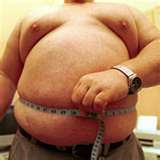
A couple weeks ago, I was in Orlando on business. I stayed in an expensive hotel on Disney property and took our business partners to dinner at an even more expensive Disney hotel. At both these hotels, we had occasion to visit the pool areas.

You know how in the movies, everyone by the pool is beautiful? How the men are gorgeous and the women are muscular? Well, real life at Disney is nothing like that. Poolside at Disney looks more like a convention of pears, grapes, and eggplants, but nobody's wearing a costume. Makes you wish they were.
No wonder people go to the Internet when they want to see beautiful people.

The Wall Street Journal recently quoted World Health Organization statistics, which show the following estimated obesity rates for people aged 15 years and over ("obese" = BMI >30):
  • Japan 1.6%
  • China 1.7%
  • France 7.2%
  • Germany 20.7%
  • U.K. 22.9%
  • U.S. 39.2% We're #1! We're #1!

American dominance is always comforting, but aside from American superiority, what conclusions can we draw from these statistics?

  • Speaking English makes you fat. It's probably because of all the lazy vowels (which, in the U.S., are worst in the South, and that's where the fattest people are).

  • Speaking Asian languages makes you skinny, because it takes a lot of energy to speak such difficult languages.

You can't really disagree with this. Statistics don't lie.